

One hundred years ago today, Calvin Coolidge was toying with a third presidential term. And people had opinions.
I’m Chris, and this is Hidden Lens History. Every day I open newspapers from exactly one hundred years ago, find something worth sharing, and follow it as far is I can.
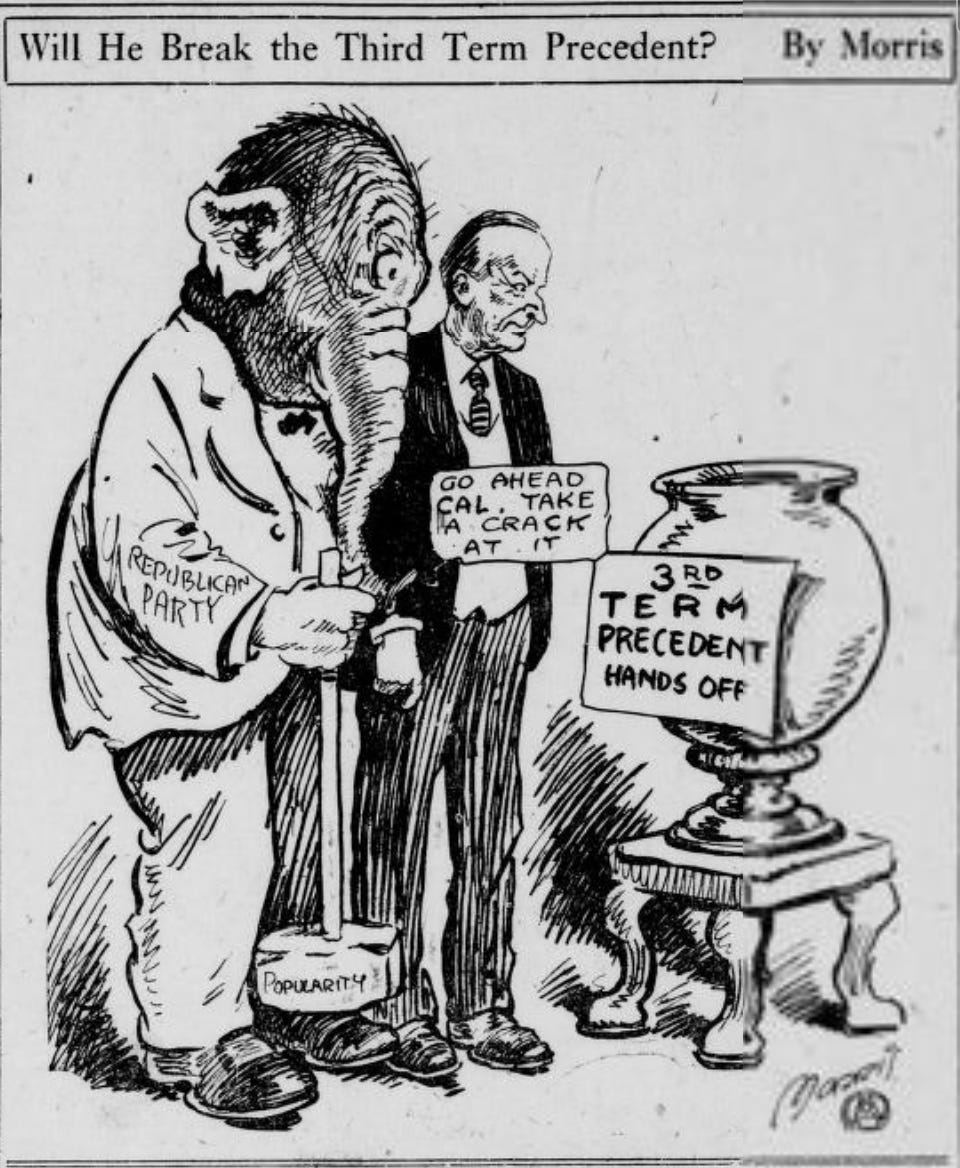
I’m looking at a political cartoon from September 22nd, 1926. It’s President Calvin Coolidge standing near a vase labeled “3rd Term Precedent; Hands Off.” Behind Coolidge stands the Republican elephant, holding an enormous hammer labeled “Popularity.” And the elephant has some advice for the president: “Go ahead Cal, take a crack at it.”
Across the top of the cartoon is the question everyone was asking in 1926: “Will He Break the Third Term Precedent?”
Today, that question sounds silly. Somehow topical, but still silly. At least for most people. A president gets two terms. But I had forgotten, in 1926, that wasn’t actually the law.
The Constitution originally placed no limits on how many times someone could be elected president. That limit arrived in 1951 with the Twenty-Second Amendment. Before that, it was just a long-standing tradition dating back to George Washington, and his decision to leave office after two terms.
But Calvin Coolidge wasn’t about to just selfishly seek a third consecutive term. Instead, his case was genuinely confusing.
Coolidge didn’t enter the White House by winning a presidential election. He was Warren Harding’s vice president when Harding died in office and he inherited the final portion of Harding’s term.
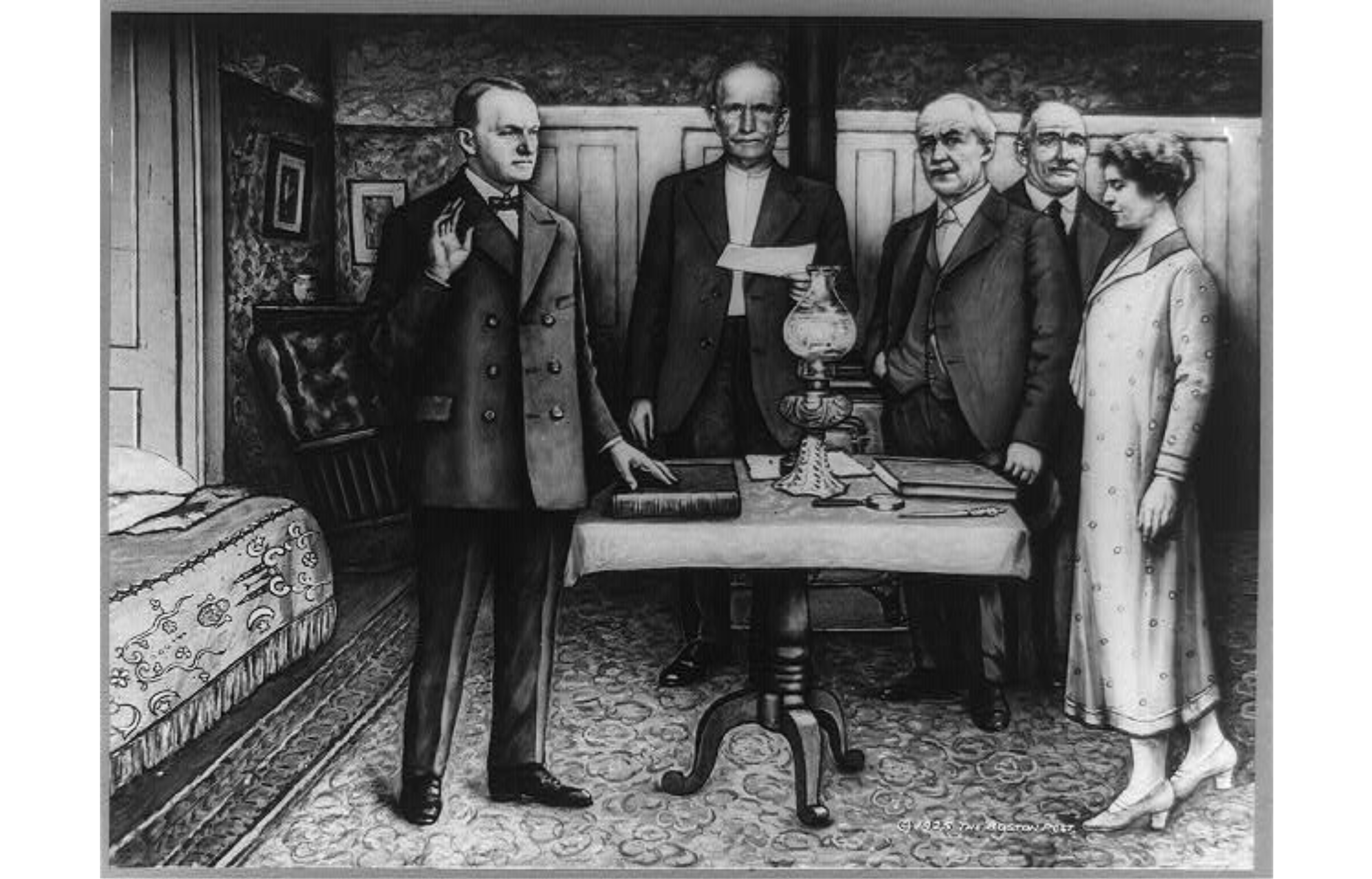
So that was presidential term number one. To some. Then, he ran for president himself in 1924. Coolidge won that election convincingly.
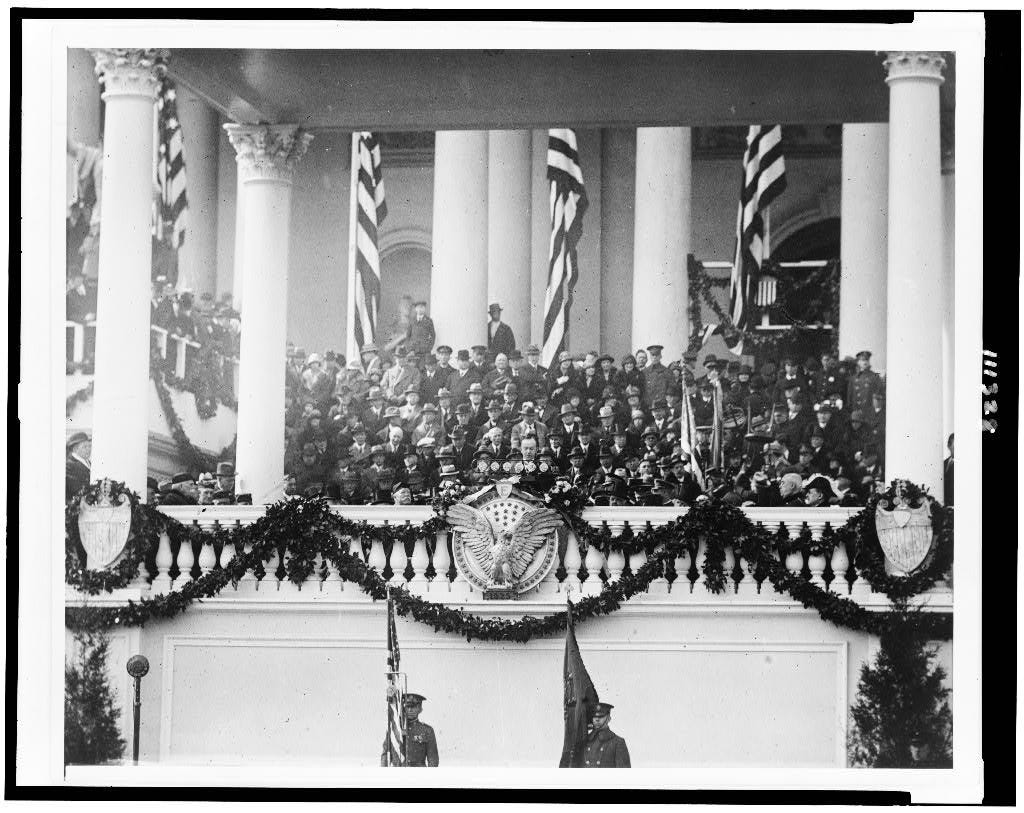
That gave him a full four-year term running through March 1929. So… was that term two? To some. Almost immediately, people saw the problem coming. If Coolidge ran again in 1928, and won, would that be his second elected term? Or his third presidential term?
By the summer of 1926, two full years before the election, people were already talking about it. Some predicted that public opinion would “brush aside third-term objections,” and were certain nobody could defeat Coolidge if he chose to run.
Others said that wasn’t a good idea.
Henry Ford’s paper, the Dearborn Independent (which had its own issues), argued that Americans had a “deep-seated opposition to third terms” and reminded people what happened to the two men who had already toyed with it. One being a very close comparison.
Theodore Roosevelt had also famously become president because his predecessor William McKinley died after being assassinated. He then won his own term in 1904, then stepped aside in 1908. But four years later, he changed his mind, and ran again in 1912.
That campaign started the argument over what counted as a third term. Roosevelt said that the tradition only prohibited a third consecutive term. His opponents were less convinced.
At the time, one cartoon even showed Roosevelt trying to dodge something called the “Anti-Third Term Principle,” with the ghost of George Washington there to remind him of the tradition.
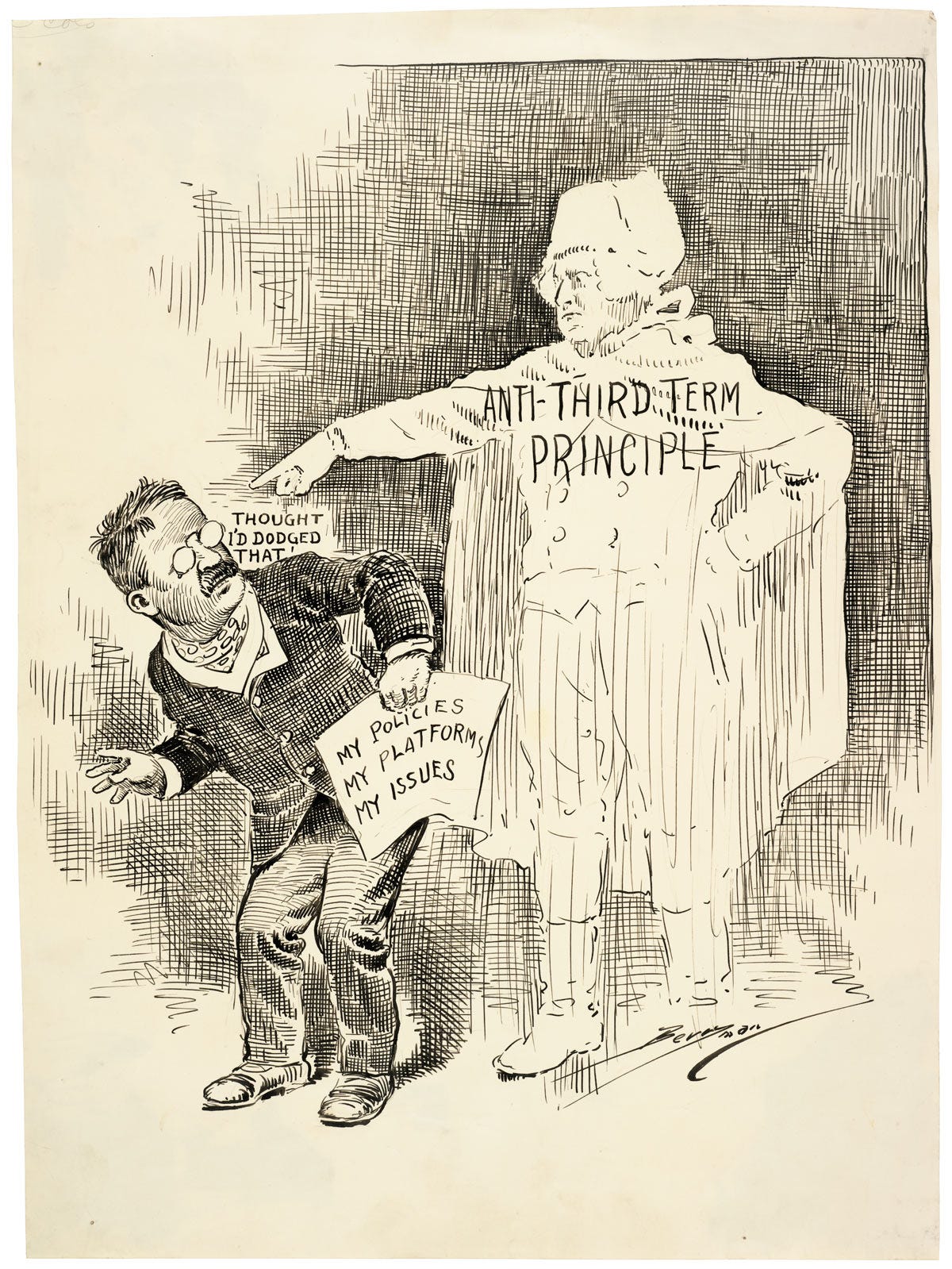
Roosevelt lost that election.
Everyone including Coolidge agreed that his situation was complicated. But it took him nearly a year to give everyone a real answer about what he was going to do. On August 2nd, 1927, exactly four years after Harding’s death, Coolidge called reporters to his office and handed them a little strip of paper containing one sentence:
“I do not choose to run for President in nineteen twenty-eight.”
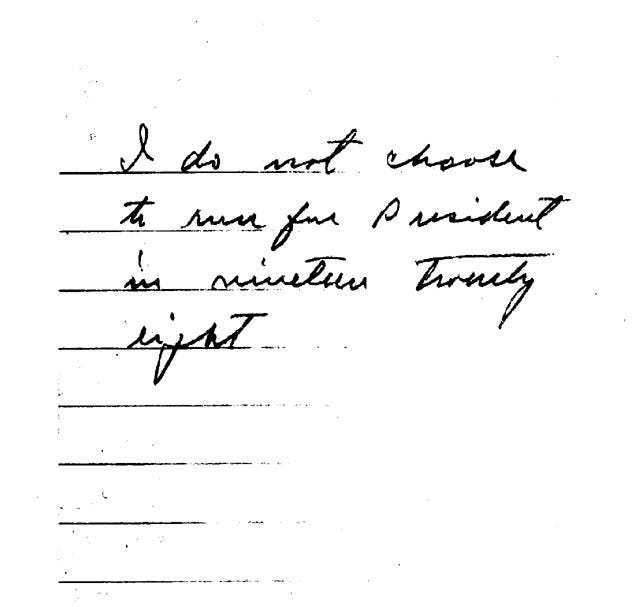
Even that somehow failed to end the speculation. Did he refuse to run, or was he just saying he wouldn’t actively seek the nomination? And, would the Republican convention nominate him anyway?
The question lasted long enough that Coolidge had to make his position even more clear. And eventually, we did learn how he felt. In his 1929 autobiography, Coolidge wrote that he supported the country’s long-standing tradition against a third term. But he also said that he didn’t believe the rule technically applied to a vice president who inherited part of someone else’s term.
And his actual reasoning for not running was much simpler. Coolidge wrote that, “ten years would be a very heavy strain.” He worried about what another four years would demand of his family, and concluded that a president should avoid even the appearance of selfishly holding onto the office.
Which, that part, makes the cartoon from exactly one hundred years ago today, even more appropriate.
See you tomorrow - Chris
At least apparently he was popular, total reverse of Trump
I am not a presidential historian, and learned most of this (again?) today as I put the article together. It reminded me that 100 years ago is short enough that it’s within our reach (my g’pa turns 103 next month!) but also far enough that stuff like this is nearly completely lost from our daily existence… unless you’re a historian, or male over the age of 60.