This website uses cookies

Read our Privacy policy and Terms of use for more information.

This very quickly caught my eye today. Finding out what happened afterwards? That took forever. But don’t worry, I traced this story all the way to the final shot. Literally
The Escape

Sometime in early August 1926, an East Indian leopard broke out of Oliver W. Holton's private Twin Brook zoo near Middletown, New Jersey, and disappeared into the woods. The papers can't quite agree on exactly when, but I’d say around August 5th given all the coverage. People were genuinely terrified. Keeping pets and small children inside, keeping shotguns close to the door. Anything to be ready for an obviously hungry leopard.

The Manhunt

By August 9th, a small army was combing Monmouth County. Thirty armed men from the zoo reported no trace of the animal. Tips poured in from across the county and led nowhere, searchers even chased down a phoned-in report of a farmer named "Campbell" who, as far as anyone could tell, didn't exist. An 8-year-old girl on Nut Swamp Road said she'd been frightened off from picking apples by something she described only as "a white and yellow dog." Holton himself predicted the leopard would eventually give itself away by attacking livestock. The paper's own headline called the whole search a "wild goose chase."

Asbury Park Press, August 9, 1926

The Chimpanzee Joins In

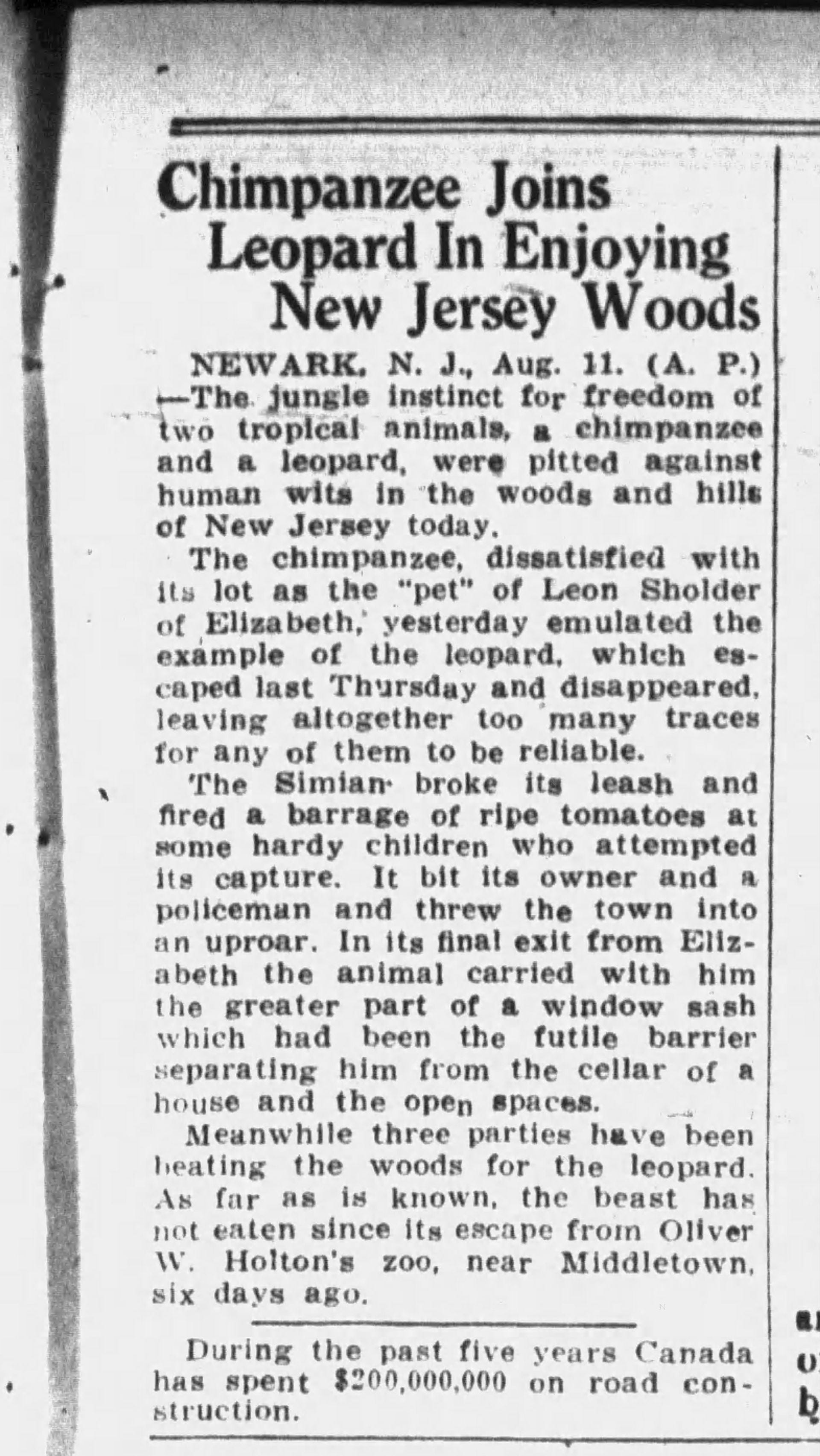
Two days later, on August 11th, a newspaper reports on a second animal deciding to join the wild cat. A pet chimpanzee owned by a man named Leon Sholder in Elizabeth, New Jersey broke its leash after a group of boys started throwing stones at it. It raided a tomato patch and fired the ripe ones back at everyone who came near, its own owner and a police officer getting bit in the process, then tore through a window sash on its way out of town. This one is worth reading in full below… the journalist really had fun with this one.

Wilkes-Barre Times Leader, August 11, 1926

It didn't get far. An overnight search ended with the chimp caught “in the unromantic folds of a dog catcher’s net. Hauled off to the city pound where it “awaited instructions”.

Everyone Has an Idea of How to Catch It

Word of the hunt spread far enough that a self-described bee expert from Yardley, Pennsylvania named Elmer E. Guy felt moved to write in with detailed trapping instructions: an elevated cage baited with a goat kid, steel traps on chains with bells attached, calf's blood sprinkled around to mask human scent, and a warning not to stake the traps down, since a leopard can pull free of anything anchored.

All the while the leopard was loose, reports of small animal attacks increased. True or untrue. But also, check the other article headlines that day below (👀 why were so many animals on the loose?!)

The Times Aug 15th, 1926

The Government Gets Involved

By September, the U.S. Department of the Interior had entered the story. Officials mailed the zoo owner, Holton a bottle of catnip oil, on the recommendation of a hunter who claimed 27 leopard kills in Africa and swore the scent could sedate a big cat long enough for a clean shot.

The zoo tested it first on its own lions, tigers, and bobcats, who reportedly went glassy-eyed and playful for hours, described as behaving "like drunken men in an extremely jolly and mellow mood."

Encouraged, they smeared the oil on bait and staked it out near a farm where a dead flock of chickens had already turned up. It worked exactly zero times. Every time hunters set the bait, rain washed the scent away before the leopard came near.

The Daily Register September 8th, 1926

How It Actually Ended

Subscribe to keep reading

This content is free, but you must be subscribed to Hidden Lens History to continue reading.

I consent to receive newsletters via email. Terms of use and Privacy policy.

Already a subscriber?Sign in.Not now

Reply

Avatar

or to participate